Touchgrind BMX 2
- 4.7
- Rating
- 50.00M
- Installs
- Free
- Price
 Analysis by App-foxy
I keep coming back to Touchgrind BMX 2 because it turns a bike trick into something that feels perfectly suited to a phone screen. Instead of steering a rider through a conventional racing course, I control the bike directly with touch gestures, launch from ramps, and try to connect flips, spins, and landings without losing the run. It is quick to understand, but surprisingly demanding once I start chasing cleaner lines and higher scores.
Illusion Labs’ game sits in the sports category, although it feels quite different from a traditional cycling game. There is no long career simulation to manage and no need to memorize a large collection of buttons. The appeal is in the physical interaction: two fingers can influence the bike, while timing, balance, and release matter just as much as the direction of a swipe. That makes each attempt feel like a small experiment.
The game is free to start and carries an Everyone content rating, so it is easy to recommend as a casual download for a broad audience. It does include optional in-app purchases ranging from $0.99 to $24.99 per item, which is worth remembering if the player is a child or if the game becomes a regular habit. My overall impression is positive, but the best experience comes from treating it as a skill game rather than as a relaxed bike ride.
You May Also Like

 Google Keep - Notes and lists
Google Keep’s Quiet Growth Shows the Appeal of Simpler Notes
As mobile work gets busier, Google Keep keeps winning a simple contest: capture a thought quickly, find it later, and get on with the day.

 Blood Strike: 2.5 Anniversary
Blood Strike’s Loadouts Turn Every Drop Into a Tactical Gamble
A close look at Blood Strike’s custom loadouts: how fast access to signature weapons reshapes its battle royale rhythm, rewards preparation, and narrows the gap between fights.

 Pandora - Music & Podcasts
Pandora’s Music Is Easy to Start, but Harder to Recover
Pandora’s strength is its low-effort path from a seed to a station. Its weak spot is how much confidence it asks you to place in connection, setup, and quiet recovery.

 8 Ball Pool
 Is Built on Rivalries, Rematches, and Routine
A close look at the rivalries, rematches, shared routines, and unanswered safety questions that turn a quick pool match into a persistent mobile community.

 Samsung Music
’s Quiet Strength Is Playing What You Already Own
Its reach comes less from spectacle than from dependable access to a personal library. That simplicity is both the app’s strongest retention engine and its ceiling.

 AccuWeather: Weather Radar
AccuWeather Review: A Quick, Clear Forecast for Everyday Decisions
For everyday plans, the best forecast is the one you can understand quickly. AccuWeather makes rain timing, radar, and local conditions easy to act on, with a few trade-offs.
More From Our News Desk



How the current version feels to play
I use this section to focus on the practical feel of a current run: not just whether a trick works, but how small, repeatable choices make the controls easier to read. I’ll also look at the habits that help me distinguish a genuine timing mistake from a rushed attempt, which is a useful starting point before considering settings and faster patterns.
A touch system that rewards control
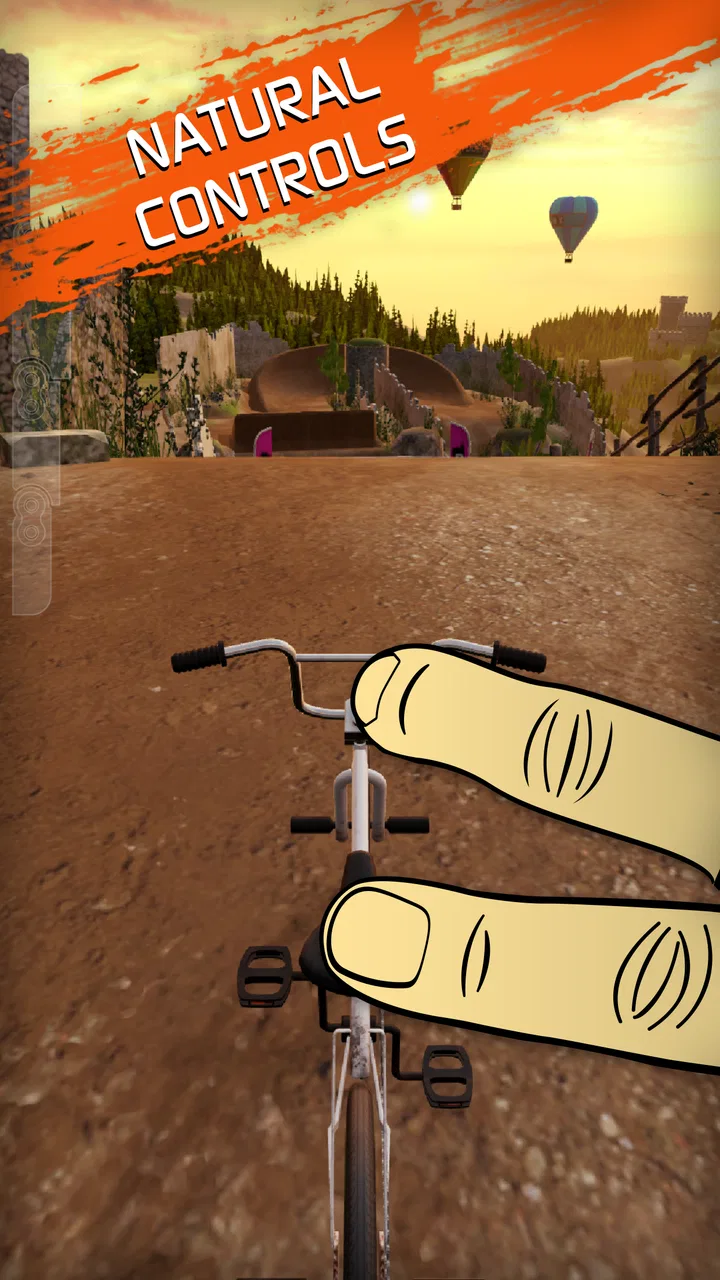
The first thing I notice is that the controls are the actual identity of the game. I am not simply tapping a jump button and watching an animation. My fingers affect the bike’s movement, so a trick can succeed because I timed the gesture well or fail because I released at the wrong moment. That direct relationship gives the game a satisfying learning curve.
At the beginning, I can focus on basic movement and landing safely. After that, the challenge changes. I start thinking about how to approach a ramp, when to rotate, how much momentum to carry, and whether a risky trick is worth attempting. The difference between a messy landing and a clean one is often a tiny adjustment, which makes improvement feel earned rather than random.
This also means the game is less forgiving than many casual sports titles. If I am looking for something that plays itself while I make occasional taps, this is not the right choice. Touchgrind BMX 2 asks me to pay attention, especially when the course becomes more demanding. A larger phone or tablet can make finger placement easier, while a small screen may make precise gestures feel cramped.
Short sessions with room to master
The format works particularly well when I have only a few minutes. I can start a run, attempt a route, fail quickly, and try again without needing to rebuild a complicated setup. That makes it a good companion for a short break, a commute when I am seated, or a quiet moment when I want something more engaging than a puzzle that plays in the background.
What keeps it from becoming disposable is the gap between completing a course and performing it well. A first successful run may feel satisfying, but it rarely feels like the end of the challenge. I can return to improve the approach, link tricks more smoothly, or take a line that looked too risky during the first attempt. The game therefore works for both casual players and people who enjoy repeating a compact challenge until their movements become consistent.
One useful habit is to separate practice from score chasing. When I try to learn a new trick while also demanding a perfect run, I tend to rush and repeat the same mistake. I get better results by first choosing a safe section, experimenting with the gesture, and only then attempting to include it in a full run. That small change makes the difficulty feel more manageable.
Why the physics matter more than spectacle
The visual presentation is important, but the lasting appeal comes from how the bike reacts. A jump is not just a decorative moment between two checkpoints. It gives me a short window to make decisions, and the landing exposes whether those decisions were controlled. When a run works, the sequence feels like something I performed rather than something the game awarded automatically.
That design creates a useful trade-off. The game can feel elegant when I understand the movement, but frustrating when I do not. A failed attempt may look simple from the outside, yet the mistake can come from approach speed, rotation timing, finger placement, or a late correction. I appreciate that depth, although players who dislike repetition may decide that the learning process is too demanding.
Progression without pretending to be a full simulator
I would not approach this as a realistic BMX management game. It does not replace a detailed simulation with equipment statistics, long-term team planning, or a broad sports season. Its focus is narrower: perform tricks, learn the handling, and improve the quality of each run. That narrow focus is a strength when I want immediate action, but a limitation when I want a large world or a story-driven structure.
The free entry point makes it easy to test that idea before spending anything. I can discover whether the gesture-based handling suits me instead of committing to a premium purchase immediately. At the same time, optional purchases can affect how a player thinks about continued progression, so I would set spending boundaries in advance if the game is being installed on a family device.
What the release history tells me
The game was released on December 13, 2018, and the current version is 2.4.5. Those details place it in the established, long-running part of mobile gaming rather than among brand-new experiments. For me, that matters because the core concept has had time to settle: the game is not asking players to learn an unfinished idea, but it also does not feel like a newly launched product built around current trends.
I see the version number as evidence of ongoing product evolution, not as a promise that every personal wish has been addressed. A later version can improve stability, presentation, compatibility, or the general feel of the experience, but it does not automatically change the basic design philosophy. The current game remains centered on touch-controlled BMX performance, and that is the part I would evaluate before anything else.
Existing players should therefore expect continuity rather than a completely different game. If they already enjoy the direct controls and repeated attempts, the current build should feel like the same recognizable experience in its mature form. If they disliked the gesture system from the beginning, a version update is unlikely to transform it into a conventional button-based racer.
How the audience has responded
The public response is strong, with an average rating of 4.5 from around 328 thousand ratings. The game has also passed 50 million installs, which suggests that its unusual control style has reached far beyond a small niche of BMX enthusiasts. I take those figures as useful context, but they do not remove the need to try the handling personally. A popular touch system can still feel uncomfortable in my hands.
There are around 5 thousand written reviews, and that volume helps explain why the game has remained visible. Still, ratings are best read alongside the design itself. Players who enjoy repetition, precision, and short skill tests are more likely to appreciate it than people who want a forgiving sports game with constant unlocks and little failure.
The effect on someone who already plays
If I had played an earlier build, the main benefit of staying current would be having the latest version of the same central experience rather than starting over with a separate title. My advice would be to update with realistic expectations: look for a smoother, more settled product, but do not assume that the controls will become less demanding. The game’s identity depends on the player’s input, so its biggest strength is also the source of most complaints.
For returning players, I would also revisit the early sections instead of jumping straight back into the hardest routes. Touch memory fades quickly. A few low-pressure runs help me recover the feel of rotating, correcting, and landing, and they reveal whether my current finger position is comfortable. This is more useful than blaming the bike immediately after a failed attempt.
Another practical tip is to play with a clean screen and consistent grip. Because the game relies on sliding and repositioning fingers, a greasy display or an awkward one-handed posture can create mistakes that look like bad physics. I prefer holding the device securely and keeping the other hand free for the control gestures. That setup makes the result more repeatable.
Where the experience still has friction
The biggest gap is accessibility of mastery. The basic idea is easy to understand, but the precision needed for reliable tricks takes patience. A player may know exactly what they want the bike to do and still fail because the gesture was slightly early or late. That is satisfying for a practice-minded player, yet discouraging for someone who expects immediate success.
The narrow focus can also become repetitive. I enjoy repeating a route when I can see a specific improvement, but the same loop feels less rewarding when I am not learning anything new. This is not a flaw in the controls; it is a question of personal motivation. Players who need a story, broad exploration, or frequent changes of activity may prefer a larger sports game.
The free model is another point to consider carefully. I like being able to try the game without an upfront charge, but optional purchases between $0.99 and $24.99 per item mean that the full spending experience depends on how the player approaches the available extras. I would not hand it to a child without checking purchase controls first. For adults, the simplest approach is to decide whether the free portion already provides enough value before buying anything.
There is also a difference between playing for relaxation and playing for concentration. The game can be calming when I repeat a familiar line and finally land it cleanly, but it can become surprisingly intense when I am protecting a good run. It is not my first choice when I want passive entertainment. I choose it when I am willing to focus for a few minutes.
Who should choose it, and who should skip it
I recommend it to players who like arcade sports games with a physical touch component. It is especially suitable for someone who enjoys learning through repetition, improving a route gradually, and finding satisfaction in a successful landing. It also works for people who want a compact game rather than a long session with menus, teams, and management tasks.
I would be more cautious recommending it to players with limited patience for failure or anyone who strongly prefers traditional virtual buttons. The game’s unusual input is not a minor feature that can be ignored; it is the main way the player communicates with the bike. If that interaction feels awkward during the first attempts, another sports title with simpler controls may be a better fit.
It is also not the best option for someone seeking a realistic BMX career. The experience is about the moment-to-moment trick and the satisfaction of mastering a line, not about reproducing every part of the sport. A conventional racing game would be better for competitive laps, while a management game would suit someone who wants progression through equipment, riders, or schedules.
How it compares with familiar alternatives
Compared with a standard racing game, this one gives me more responsibility for the actual movement of the bike. Racing games usually emphasize acceleration, braking, steering, and position against opponents. Here, the important question is whether I can make my fingers and the bike cooperate during a jump. That makes it more intimate and more technical, but also less suitable for players who want head-to-head racing to be the central attraction.
Compared with an endless runner, the game feels less automatic. An endless runner often rewards quick reactions as the environment moves toward the character. This BMX experience gives me more control over the trick itself, so the skill is not only about recognizing an obstacle but also about shaping the bike’s motion. I prefer it when I want deliberate practice, while an endless runner is easier when I want instant, low-commitment action.
Compared with a realistic sports simulator, it is far more approachable in its presentation and session length, but less comprehensive. I can get into a run quickly, yet I do not receive the same sense of managing a complete sporting discipline. That trade-off is exactly why I keep it installed: it offers a concentrated BMX fantasy instead of trying to cover everything.
Small techniques that improve everyday play
My first practical recommendation is to learn one movement at a time and repeat it in a safe section. Trying to combine several tricks immediately makes it difficult to identify the cause of a failure. Once the basic motion feels predictable, I add one extra rotation or change the approach. This turns the game into a series of manageable tests rather than a vague struggle for a better score.
Second, I watch the landing more carefully than the trick itself. It is tempting to focus on making the bike spin because that is the visually exciting part, but a controlled landing determines whether the whole sequence has value. I try to finish the rotation early enough to prepare for the ground, leaving room for a correction instead of improvising at the last instant.
Third, I use short sessions intentionally. If my fingers become tense, I stop chasing the same failed attempt. Returning later often works better because I am no longer forcing the gesture. This is a useful difference between genuine practice and repetition without attention: ten thoughtful tries can teach more than a long session spent reacting emotionally.
Finally, I treat risky tricks as choices rather than obligations. A flashy move can be worthwhile, but a clean, simpler line may produce a better overall run if I am still learning. That mindset helps me enjoy the game even when I am not performing its most dramatic possibilities.
What I would watch going forward
For the current version, I would watch how well the game continues to balance accessibility with depth. The controls need to remain responsive enough for newcomers to understand, while still giving experienced players room to refine their technique. If future changes make the early experience friendlier without removing the importance of timing, that would be the most meaningful direction in my view.
I would also pay attention to how the free structure affects the sense of progression. Optional purchases are reasonable when the core experience remains enjoyable without pressure, but players should feel that practice—not spending—is the main route to improvement. The game is at its best when a better result comes from a better gesture.
My final recommendation is straightforward: try it if the idea of performing BMX tricks with your fingertips sounds appealing, and give the controls enough time to reveal their depth. The game has a 4.5 average, more than 50 million installs, and a mature current version, but its real test is personal. I enjoy it because every successful run feels physically directed by me. If you want a fast, focused sports game with a distinctive control system, it is an easy choice to sample for free. If you want relaxed button presses, realistic career management, or constant variety, I would look elsewhere.
FAQs for Touchgrind BMX 2
01What devices are compatible with Touchgrind BMX 2?
Touchgrind BMX 2 is available on both Android and iOS platforms. It requires Android 5.0 and up or iOS 9.0 and later. The app is compatible with most modern smartphones and tablets, but for the best experience, a device with a powerful processor and graphics capability is recommended.
02Is Touchgrind BMX 2 free to play?
Touchgrind BMX 2 is free to download and play. However, it offers in-app purchases that allow players to unlock additional features, bikes, and customization options. While the core gameplay is accessible without spending money, these purchases can enhance the gaming experience.
03What are the main features of Touchgrind BMX 2?
Touchgrind BMX 2 features realistic physics and stunning graphics. Players can perform a variety of tricks and stunts across diverse locations. The game also offers customization options for bikes and comprehensive leaderboards. Its intuitive controls make it accessible while still being challenging to master.
04How can players improve their skills in Touchgrind BMX 2?
Players can improve their skills by practicing regularly and experimenting with different tricks and combos. Watching tutorials and studying the replay feature can also help. Understanding the physics and timing of the game is crucial, as well as learning how to navigate the various terrains effectively.
05Does Touchgrind BMX 2 require an internet connection?
Touchgrind BMX 2 can be played offline, allowing players to enjoy the game without an internet connection. However, certain features like leaderboards and some in-app purchases will require an internet connection to function properly. Playing online also allows for syncing progress across devices.
Pros
- Intuitive controls enhance gameplay experience.
- Impressive graphics for a mobile game.
- Wide variety of customization options.
- Engaging multiplayer mode available.
- Frequent updates with new content.
Cons
- Requires internet for most features.
- Can be challenging for beginners.
- In-app purchases can be pricey.
- Limited offline gameplay options.
- Some devices may experience lag.

Touchgrind BMX 2
Gallery